2026 AHR Conference: Las Vegas Edition
February 6, 2026
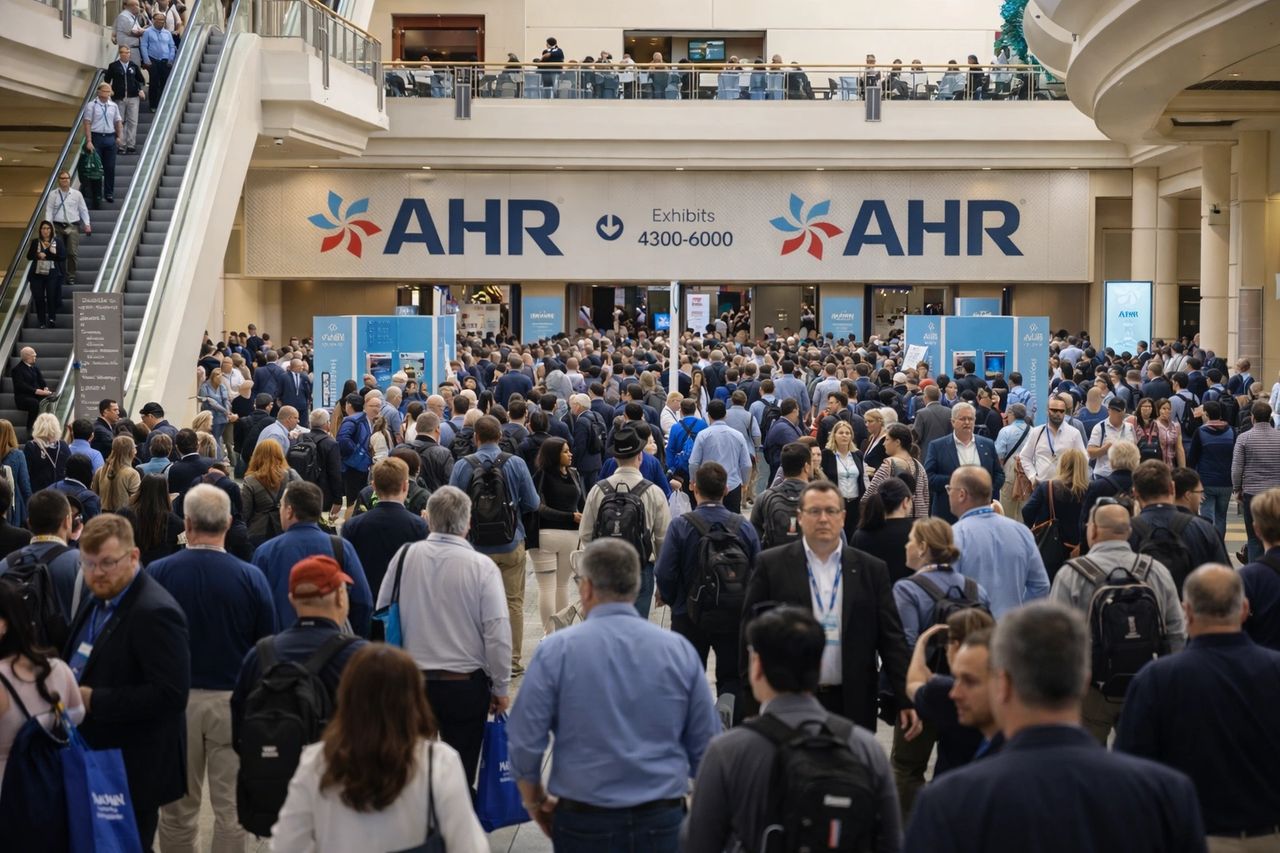
The recent AHR Conference in Las Vegas once again made the case for both the strength and the frustration of gatherings at this scale. By most accounts, it was a good show. Foot traffic was steady. Booths stayed busy. People stopped long enough to ask real questions instead of just grabbing swag and moving on. And yet the same paradox keeps asserting itself. With hundreds of exhibitors and an almost absurd volume of equipment on display, it is easy for even genuinely important ideas to dissolve into background noise. At AHR, differentiation is not a nice-to-have. It is the only thing that cuts through, unless you already arrive with a reputation that buys attention on sight.
CarbinX did not have staff on the floor this year, but the view is still familiar. We have spent enough time at shows like this, and we stay close enough to partners like Patterson-Kelley to recognize the patterns without walking every aisle. One of those patterns has become hard to ignore. Commercial heat pumps are improving quickly, but they are still not ready to shoulder 100 percent of the heating load in sub-15 MBH commercial applications in a way that works reliably outside of ideal conditions. This is not an argument about direction or intent. It is about space, weight, redundancy, and the realities of retrofit work.
In many existing buildings, the footprint alone is a deal breaker. Mechanical rooms that were sized decades ago do not stretch. Roofs have limits. Access paths matter. Even when performance targets look acceptable in a model, the actual act of installing enough heat pump capacity, backing it up, and making it serviceable over time quickly turns into a game of compromises. Those compromises are rarely visible on a trade show placard. They show up later, during design reviews, value engineering, and the quiet moment when someone realizes there is simply nowhere to put the equipment.
That context is why the presence and positioning of Patterson-Kelley, alongside affiliates like Weil-McLain, continues to matter. Their visibility at AHR is not just about brand momentum. It reflects a willingness to have conversations that do not resolve neatly into a product pitch. They talk openly about where systems fall short, where optionality still matters, and how customers actually live with equipment over twenty or thirty years. The posture is restrained. Less proclamation, more contingency. Not everyone finds that exciting, but it tends to age well.
What stands out is the emphasis on flexibility without pretending that flexibility is free. Supporting multiple fuel paths, hybrid configurations, and transitional strategies requires discipline. It means designing for futures that are not fully specified yet, and resisting the urge to lock customers into a single version of what tomorrow is supposed to look like. That mindset does not generate bold headlines. It does generate systems that survive regulatory whiplash and uneven infrastructure buildout.
The commercial heating industry, for the most part, still moves after the fact. Regulations appear, timelines get announced, and only then does innovation accelerate in earnest. The result is a recurring gap between policy ambition and what is actually deployable at scale without heroic assumptions. Patterson-Kelley has been more explicit than most about operating inside that gap on purpose. By tracking where rules are likely to go and investing ahead of mandates, they avoid the scramble that happens when compliance suddenly becomes urgent. There is nothing glamorous about that work. It is mostly planning, iteration, and restraint.
Customer behaviour adds another layer of drag. Commercial buyers do not behave like consumers, even when the dollar amounts would suggest they might. People will replace a perfectly functional phone without hesitation, then postpone a heating upgrade for years while a system limps along. When decisions finally get made, they often default to the lowest upfront cost, regardless of lifecycle impact. Boilers, furnaces, faucets. The pattern repeats. This is not anti-innovation sentiment so much as risk management that has hardened into habit. Heating equipment is supposed to disappear into the background. If it demands attention, something has gone wrong.
Seen through that lens, skepticism toward large, space-hungry, expensive, or lightly proven solutions is not ideological resistance. It is caution earned the hard way. Facilities managers remember what happens when systems fail in January, or when replacement parts turn out to be unavailable, or when promised efficiencies do not survive the first few winters.
Looking forward, the idea that commercial heating will converge on a single answer feels increasingly detached from reality. Energy strategies will remain regional, conditional, and messy. What pencils in California does not necessarily work in New Jersey. Toronto and Vancouver might as well be different continents from an infrastructure standpoint. Electrification will continue to expand, but gas and hybrid systems are not vanishing on command. They will persist because the grid, the economics, and the buildings themselves demand it.
AHR is still one of the few places where you can see the whole industry in one room, even if most of the forces that decide what actually gets built never show up on the show floor. Those live elsewhere. In zoning meetings that stall projects for months. In interconnection queues that quietly reset timelines. In tariff sheets, access paths and buildings that refuse to cooperate. Companies like Patterson-Kelley don’t stand out by promising clarity about where all this is heading. They stand out by seeming comfortable operating inside the mess, designing for constraints that aren’t going away, and admitting, without much fuss, that the path forward is uneven and probably slower than anyone wants.