Edward Green's Economizer
February 13, 2026
We have a habit of mistaking spectacle for progress. We wait for the breakthrough, the moonshot, the announcement that something old has been made obsolete overnight. It makes for better headlines. It satisfies our appetite for drama.
But most of the technologies that quietly reshape the world do something far less cinematic. They reduce friction.
Friction is not philosophical. It is a drag inside a system you can walk through and touch. It is wasted motion in a linkage that should turn cleanly. It is wasted energy you can feel in a hot pipe you did not intend to heat. In commercial terms, it is heat sent up a chimney after it has already been paid for in the price per joule of natural gas, shift labour, foundational work, and insurance. You can stand outside a building and watch that loss roll into the sky.
In early nineteenth-century Britain, steam was not a metaphor. It was muscle. Mills ran on it. Railways leaned on it. Municipal water systems pulsed because of it. Boilers consumed coal by the ton, and their chimneys exhaled plumes that were both proof of power and proof of waste. The hotter the exhaust gases, the more fuel had just escaped unused. You could see inefficiency from a mile away if you knew what you were looking at.
The first generation of steam engineers had other fears. Boilers failed. Materials were inconsistent. Riveted seams split. Pressure vessels exploded with a violence that rearranged buildings and ended lives. The early obsession was survival. James Watt worked a few decades earlier on keeping the engine itself from squandering heat inside its own cycle. His separate condenser was not as romantic as the history books tell. It was a way to stop reheating and recooling the same metal mass every stroke. He reduced friction at the heart of the machine because the machine kept wasting what it made.
By the 1840s, the mood shifted. Steam had settled into the background of industrial Britain. Thermodynamics was being formalized, slowly. Once engineers began thinking explicitly in terms of conservation, inefficiency acquired a sharper outline. Coal was abundant, but it was not free. On a large installation, shaving a few percent off fuel use meant real money. Not theoretical money. Ledger money.
It was in that environment that Edward Green stepped forward.
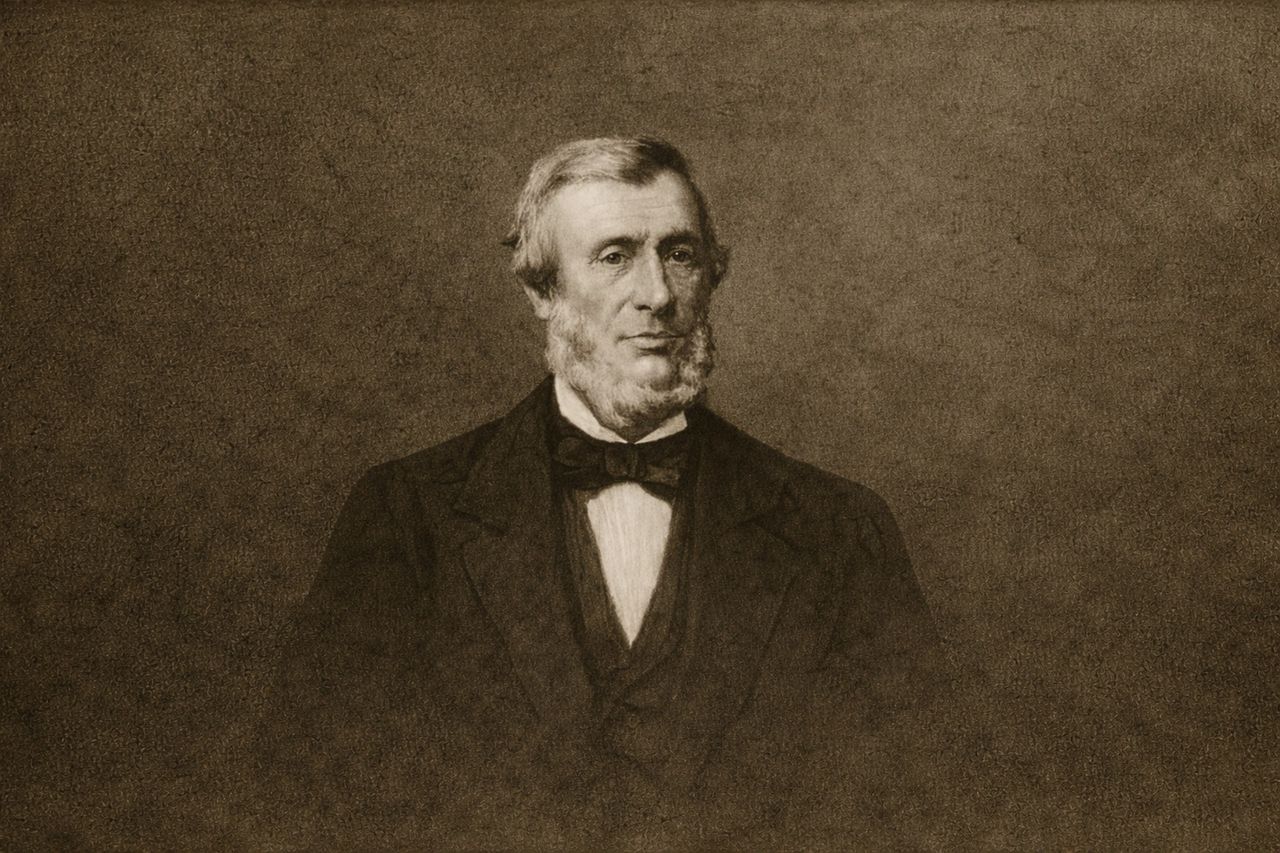
Green was born in 1793 and spent his career inside the industrial belt of northern England. He was not a showman. He was a practical engineer who understood factory accounts. In 1845, he patented what became known as Green’s Economizer. The premise was dull: do not let hot flue gases rush straight to the chimney. Force them over a bank of water-filled tubes carrying incoming boiler feedwater. Steal some of that heat back. Send warmer water into the boiler drum. Burn less coal to reach the same steam pressure.
Others had tried feedwater heating. The physics was not mysterious. But earlier attempts were often buried inside boiler shells or designed in ways that made cleaning miserable. Retrofitting was worse. Green’s move was architectural. He externalized the heat exchanger. He made it something that could be bolted onto an existing plant without ripping the whole thing apart. Factory owners did not need a new boiler house. They needed a contractor and a shutdown window.
He also dealt with soot. Coal ash coats tubes. A heat exchanger insulated by its own deposits turns into an expensive sculpture. Green incorporated a mechanical scraping gear that travelled along the tubes and cleaned them while the boiler was running. It is an unglamorous detail, but it tells you how he thought. He knew the equipment had to live in dirt. If you have ever opened a flue inspection door and had ash settle into your sleeves, you understand why that matters.
Green founded E. Green & Son in Wakefield (East Yorkshire) and built a manufacturing business around the economizer. Over time, “Green’s Economizer” became less of a brand and more of a default. Municipal pumping stations specified it. Textile mills wrote it into contracts. Later, power stations folded it into standard design. The chimney still stood, but it surrendered more of its heat before release.
The corporate lineage blurred as heavy engineering consolidated. The economizer business passed into Clarke Chapman, and from there into what is now Babcock International. In more recent decades, the Green’s name persisted in the heat recovery sector under what became Green's Power, historically connected to Wood Group. The family firm dissolved. The function did not.
Today, economizers barely register as innovation. Natural gas burns cleaner than coal, so fouling is less severe. Condensing boilers integrate heat recovery directly into their own casing. Tube spacing, materials, and flow paths. There is no grand new chapter in flue gas heat recovery because the obvious losses have mostly been taken. What remains are corrosion limits and maintenance schedules.
It can look as though the technology stalled. It did not stall. It just stopped being interesting to anyone outside the boiler room.
A modern version of the same instinct shows up in places that have nothing to do with chimneys.
Take commercial buildings that have installed heat pumps but left the rest of the system mostly untouched. The headlines focus on the refrigerant, the coefficient of performance, and the electrification angle. Fair enough. But I have seen buildings where the distribution side was still running as if the plant were a 1980s gas boiler. Constant speed pumps. Three-way valves bleed off the flow past coils that do not need it. Return temperatures are high enough to make you wince.
No breakthrough required. Just variable speed drives on the main pumps. Two-way valves instead of three. A bit of time spent on commissioning so that the control loops stop fighting each other. Lower the flow when the load drops. Let the delta T widen. The heat pump does not change. The physics does not change. The system friction does.
The economizer did not replace steam. It tightened it. Variable speed drives do not replace heat pumps. They stop wasting electricity pushing water no one asked for. The improvement is small in any single hour and enormous over a year.