I could have picked any other problem.
December 16, 2025
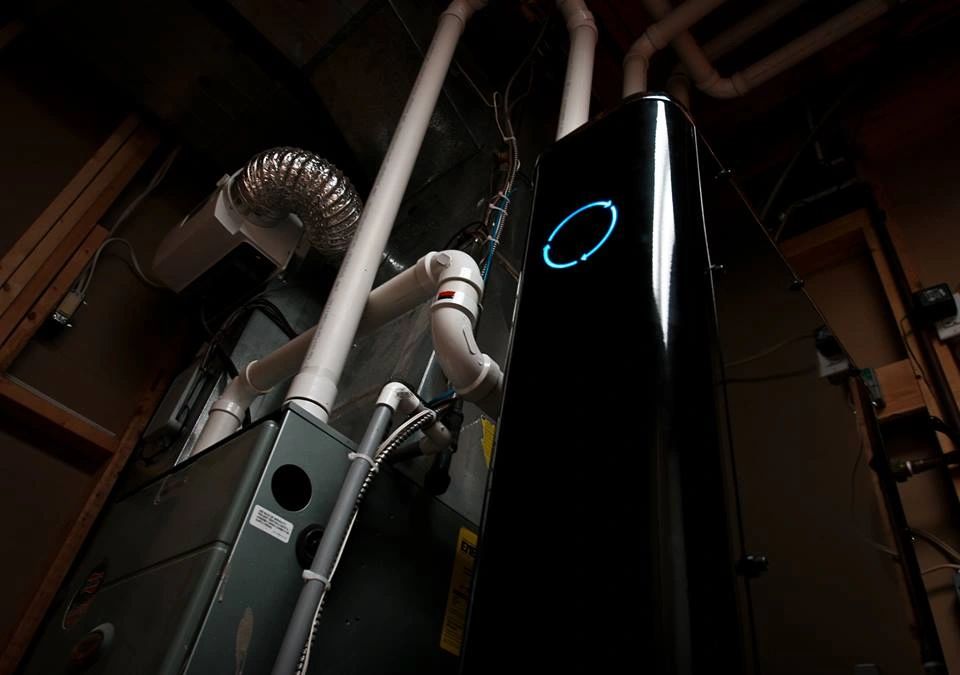
Of all the problems the HVAC industry is wrestling with, carbon is easily one of the most stubborn. I could have gone after safer, quieter challenges. Gas valve configurations. Better venting. Smarter economizers. Even hybrid heat pumps, a perfectly respectable dinner‑party topic.
But no. I chose carbon. The most complicated, polarizing, and politically charged problem on the list. The one that guarantees long meetings, raised eyebrows, and at least one person asking if this is really necessary.
Part of that comes down to the science itself. The idea that we can dump whatever we want into the atmosphere, as long as we don’t have to look at it, has never sat well with me. When you see images of Earth from space, what jumps out isn’t how big the planet is. It’s how thin that atmospheric layer actually is. A fragile skin wrapped around a very large rock. Treating it as infinite, forgiving, or optional feels optimistic at best.
Then there’s the question of who we listen to. Back when I still had debates about climate science, before I realized they were mostly a waste of time, I paid attention to where people’s confidence came from. If my mechanic tells me my alternator is about to fail, I take it seriously. If my Chief Financial Officer says the same thing, I nod politely. No offence, Shawn.
Climate change works the same way. Most of the loudest nay‑sayers aren’t climate scientists. They’re usually decent people with opinions, which is fine. But opinions don’t carry the same weight as decades of study, data, and peer review. We don’t crowdsource metallurgy or cardiology. It’s strange that atmospheric physics gets treated differently.
That said, none of this is actually the main driver for me.
Because as much as I trust the scientific community, I also understand how change really happens. First comes the almighty dollar. Then comes policy. Rarely the other way around. If a solution only works when everyone agrees, it’s not really a solution.
What I needed to build was something that made economic sense first. A system where the financial argument stands on its own. If you can save money, improve efficiency, or reduce operating risk, the climate argument stops being a barrier. Not because it disappears, but because it no longer prevents action.
Once the economics work, everything else gets quieter.
The carbon market looked very different back in the mid‑2000s, when I first started paying attention. Carbon emissions were already a concern, and had been for decades, but the framing was almost always negative. We could do something about it, the story went, but only if we were willing to spend copious amounts of cash just to make a modest dent. Come to think of it, not much has changed.
Despite years of conferences, targets, and good intentions, we still haven’t made a truly significant impact. The only time global CO₂ emissions dropped meaningfully was during COVID, when much of the world stayed indoors and large chunks of the economy simply stopped. In 2020, global emissions fell by roughly 6–7%, the largest year‑over‑year drop ever recorded, briefly returning emissions to levels last seen about a decade earlier.
That wasn’t a solution. It was a pause button. And it came with a price no one would willingly pay again, but that’s a different story.
There was another driver for me too, and it’s one most makers, innovators, and inventors will recognize immediately. The allure of creating a solution to a problem that no one else has quite figured out. The pull of tinkering, experimenting, and stubbornly believing there’s a better way hiding just out of view.
At one point, this was even shaping up to be an article for Popular Mechanics. Two innovators, Kathi Fischer, our co‑founder, and myself, tinkering away in the margins and building something novel enough to earn a bit of notoriety. Sure, we both cared about the environment. But if I’m being honest, the idea that we could put our names on the map was intoxicating.
At some point, though, the motivation shifted. The novelty wore off. The daydream of a magazine spread gave way to field installs, data logs, service calls, and the uncomfortable realization that this thing actually had to work in the real world.
When that happens, ego becomes a liability.
It’s easy to chase recognition when you’re building a concept. It’s much harder when you’re responsible for something that touches real infrastructure, real emissions, and real customers. At that point, the question stops being “is this clever?” and becomes “does this actually matter?”
Carbon has a way of forcing that reckoning. You don’t get to hide behind aesthetics or marginal gains. Either you’re capturing it, reducing it, or you’re not. The molecule doesn’t care why you started.
Somewhere along the way, I realized that even if the original spark had been curiosity and ambition, the outcome carried a different kind of weight. Once the system worked, walking away stopped being an option.
I didn’t choose carbon because it was fashionable or because it made for a clean narrative. I chose it because once you really look at the problem, it becomes hard to justify working around it.
There are plenty of ways to make HVAC systems incrementally better. More efficient. More elegant. Slightly less wasteful. All worthwhile. But carbon sits underneath all of it, quietly accumulating whether we argue about it or not.
At some point, the work stops being about why you started and starts being about what you’re willing to stay with. Carbon is simply where I stayed.