More than rounded corners and pretty motifs
December 6, 2025
There was a time, not that long ago, when the machinery that kept us warm was treated with dignity.
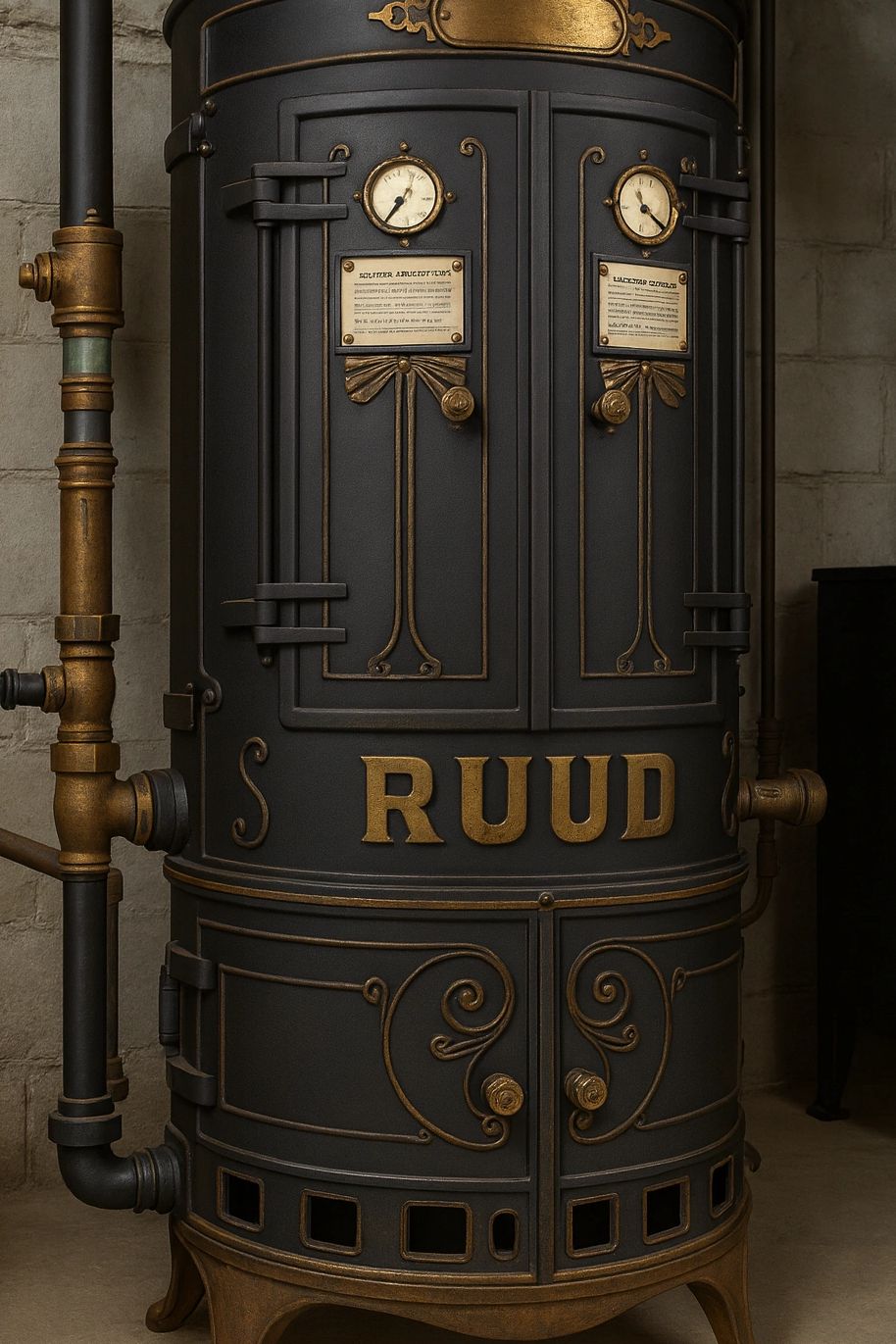
Look at any boiler built before the 1950s, and you’ll find the same surprising truth: these things were works of art. Cast-iron scrollwork. Floral motifs. Embossed model numbers framed like crests. Hinges and dampers shaped as though a sculptor had been given free rein.
They were hidden in basements, yes, but they weren’t treated like secrets. They were treated like infrastructure that mattered.
This is obvious when you stand in front of an old unit like the one in the photographs. The cast iron isn’t just a shell; it’s a statement. You see the floral patterns pressed into the metal, the damper handle that looks almost like a carved face, the twin firebox doors sitting in perfect symmetry, the refractory jacket shaped by decades of heat cycles into something that looks more like weathered stone than insulation. None of that added measurable efficiency. It added meaning.
And why wouldn’t they matter? These machines really were the beating heart of a building. People respected heat because they had to. The world before cheap energy demanded literacy; you learned about combustion, airflow, flue gas, draft, water level, pressure, ash, and soot. The learning didn’t come from textbooks. It came from standing in front of a live flame with a wrench in your hand, listening to the way the draft pulled, watching the colour of the flame, smelling when something wasn’t right.
It wasn’t romantic. It was necessary.
Somewhere along the way, we decided the aesthetics weren’t worth the cost. Manufacturers stripped the art away. Decorative iron gave way to flat sheet metal. Colours collapsed into off-white and beige. The goal became to make the equipment disappear into the background, to turn the mechanical room into a neutral, forgettable space.
In the process, something else quietly disappeared: our understanding of energy itself.
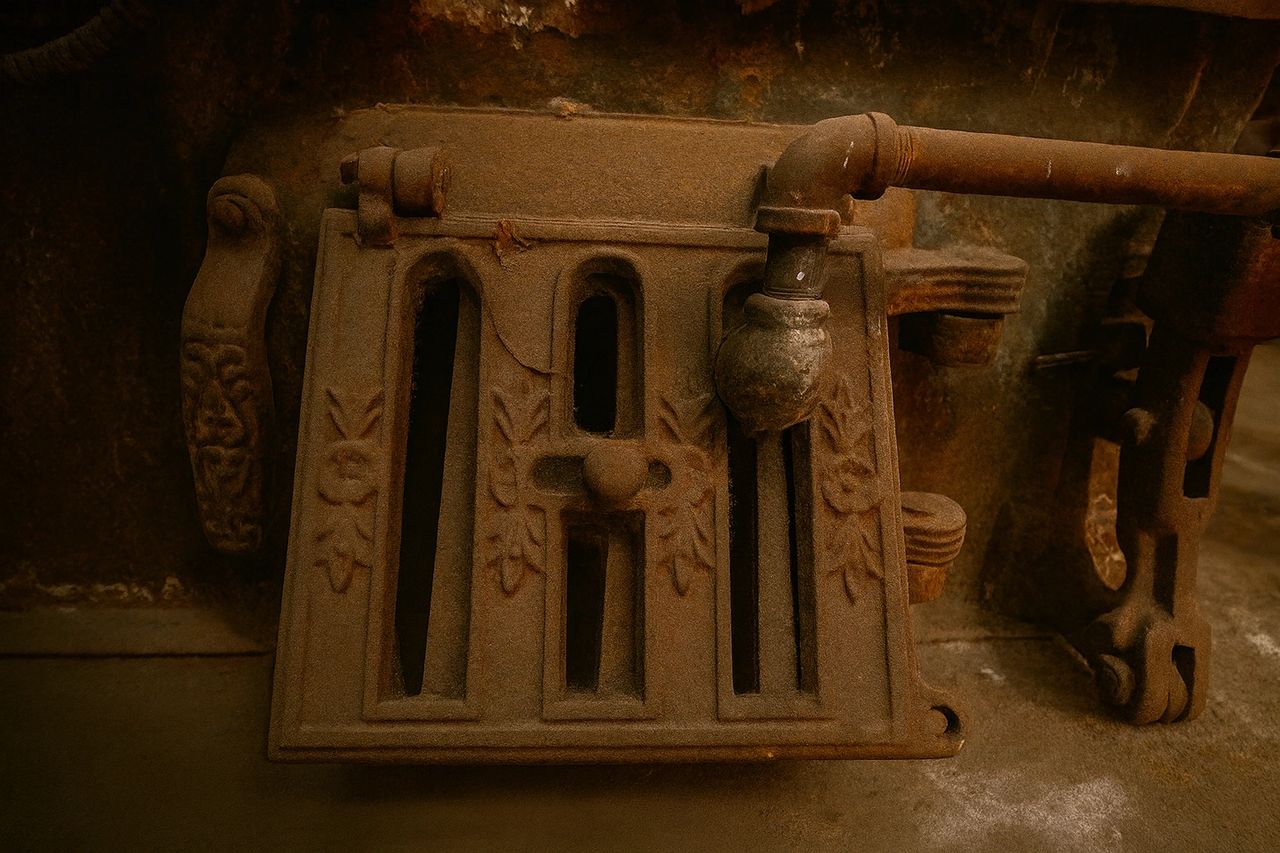
Those old boilers weren’t beautiful by accident. They reflected a worldview that said, “If something is essential, you honour it.” You make it well. You make it last. You make it look like it matters. The cast details were a way of saying this machine is essential enough to deserve care, even if only a handful of people ever see it.
Today, the philosophy is closer to the opposite. Hide it. Forget it. Hope someone else deals with it. Mechanical rooms are squeezed into leftover space and treated as broom closets with pipes. As the machines vanished behind flat panels and bland enclosures, our literacy went with them. People forgot how heat works. They forgot that there’s a real flame somewhere on the other side of that thermostat.
When the machinery feels anonymous, it’s easy to treat energy as infinite, abstract and consequence-free. Aesthetic neglect became a quiet kind of energy ignorance.
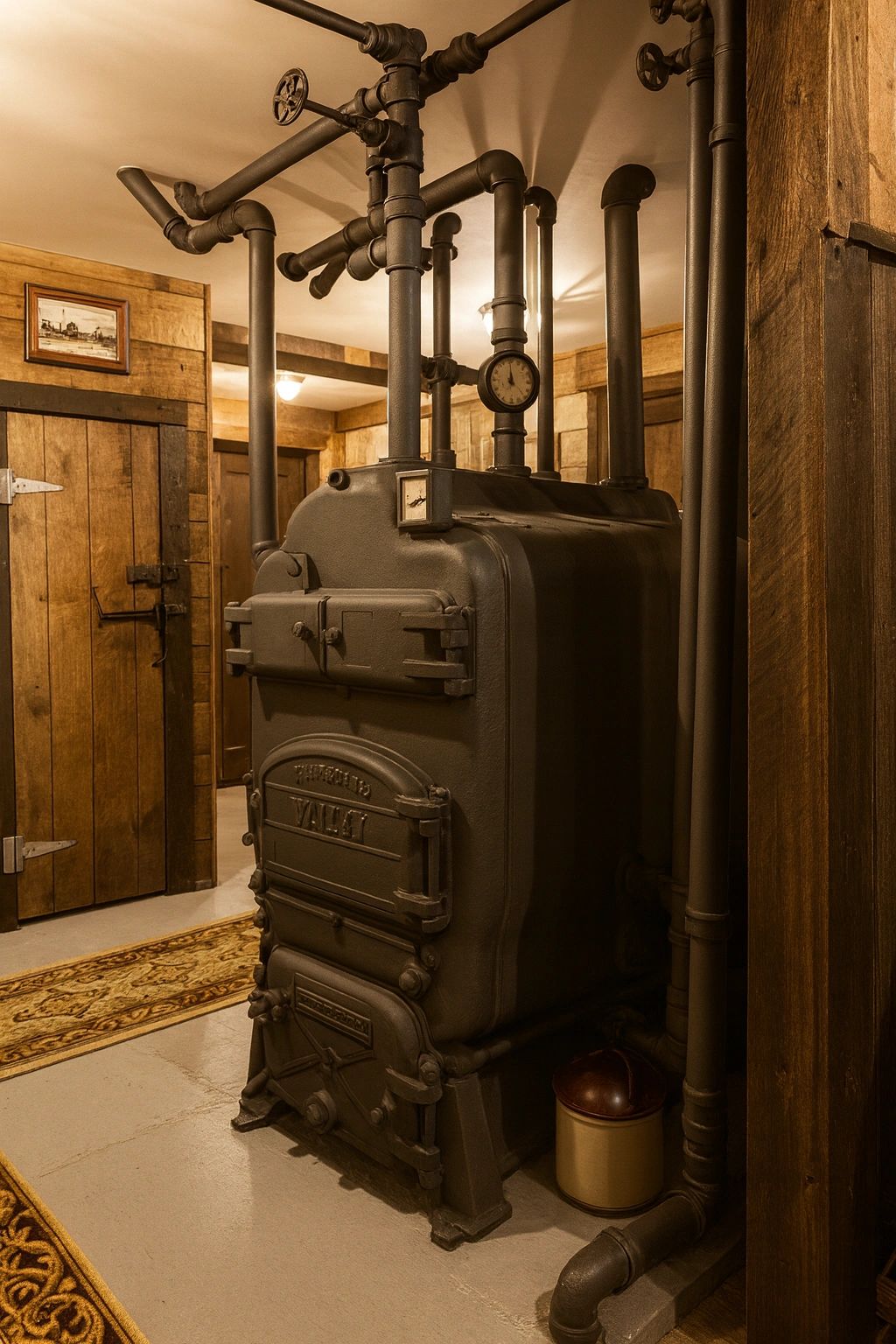
The contrast is stark when you spend time with the older equipment. Heat used to be tactile. You felt it in the floor and the handwheel, heard it in the flue, smelled the flue gases and the first scorching of dust at the start of the season. Coal and oil demanded shovels and brushes and soot-covered overalls. Even early gas conversions required attention: sticky valves, finicky pilots, draft hoods that rattled when the wind hit the building just so. Every system had a personality, and you learned to read it.
Modern systems are safer and vastly more efficient. That matters. But they also turned heat into an abstraction, a small digital number on a wall nudged up and down with plastic buttons. The gap between the act of “turning the heat up” and the realities of combustion, heat exchange and exhaust has become so wide that most people have no idea what actually happens when the burner lights.
That gap has consequences. It shows up in how we talk about energy, in how casually we waste it, and in how disconnected many people feel from the infrastructure that quietly keeps them alive through winter.
This doesn’t mean we need to resurrect Victorian filigree or drag 1,200-pound cast-iron monuments into every mechanical room. But there is a strong case for bringing back intentional design in our heating equipment, not as a nostalgic flourish, but as a form of communication.
A machine can be clean and modern without being anonymous. You can let parts of the process be visible: a glimpse into a heat-exchange path, a shape that hints at the route from burner to flue, colour cues that make it obvious where energy enters and where it leaves, materials that feel solid and durable rather than disposable. A well-designed piece of equipment can, just by the way it looks, remind people that heat has a structure and a story instead of behaving like magic.
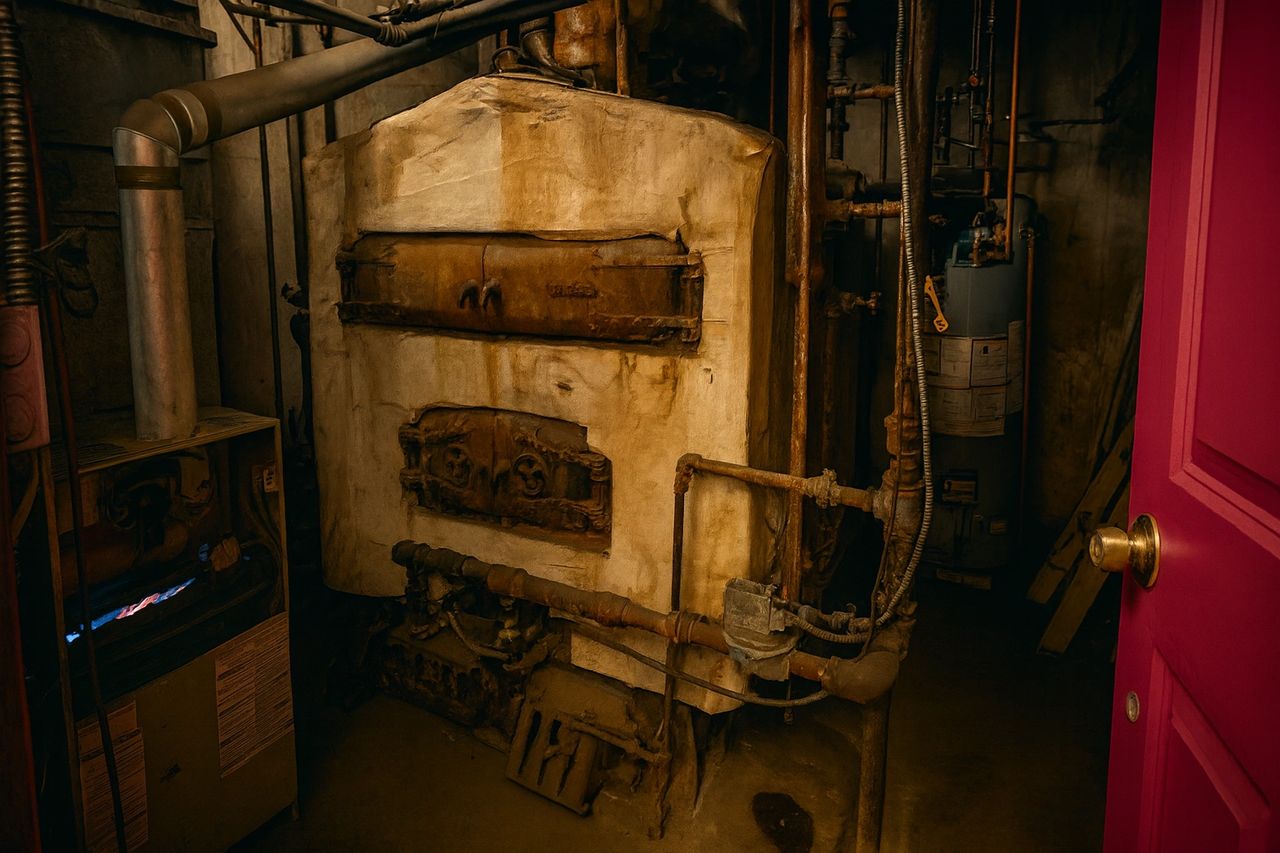
History gives us plenty of examples of how this looked when it was done well. The Ideal Redflash boilers of the late 1800s had doors that resembled cathedral windows in iron. The American Radiator Company’s “Golden Knight” models in the 1930s carried Art Deco geometry and pattern right into the front plates. Kewanee fronts from the early 20th century were covered in crests, scrolls and geometric frames. Even humble coal grates were often carved with leaves and geometric repeats because the people pouring the iron still saw themselves as craftsmen.
A century ago, when you bought a boiler, you were buying engineering and craftsmanship in the same package. Today, in many cases, you’re buying a cube with a control loop inside it.
The stakes are higher now. We live in a world acutely aware of energy use, emissions and climate, yet we interact with the equipment that produces our heat less than ever. Re-introducing thoughtful design is not about making equipment “pretty.” It’s about making it legible. When a machine has presence, when it invites a second look, it quietly teaches. People ask what that pipe does, why that surface is warm, and where the exhaust goes. Curiosity leads to understanding, and understanding is the beginning of responsibility.
Maybe those old boilers didn’t just heat the buildings they served. Maybe, in their own noisy, iron way, they taught people to respect heat itself.
And maybe the future of energy design isn’t solely about efficiency curves and emissions profiles. Those are crucial, but they’re not the whole story. Part of the work ahead is helping people reconnect with the infrastructure that keeps them safe and comfortable, to remember again that energy is physical, finite and worthy of attention.
We didn’t lose decorative boilers because the world got smarter. We lost them because the world got cheaper. Now, as the true costs of energy misuse become harder to ignore, there’s room again for beauty and intention in the places most people never see.
Not for nostalgia’s sake, but as a quiet reminder: this matters.