Norway Just Proved Carbon Capture Isn’t Optional
September 17, 2025
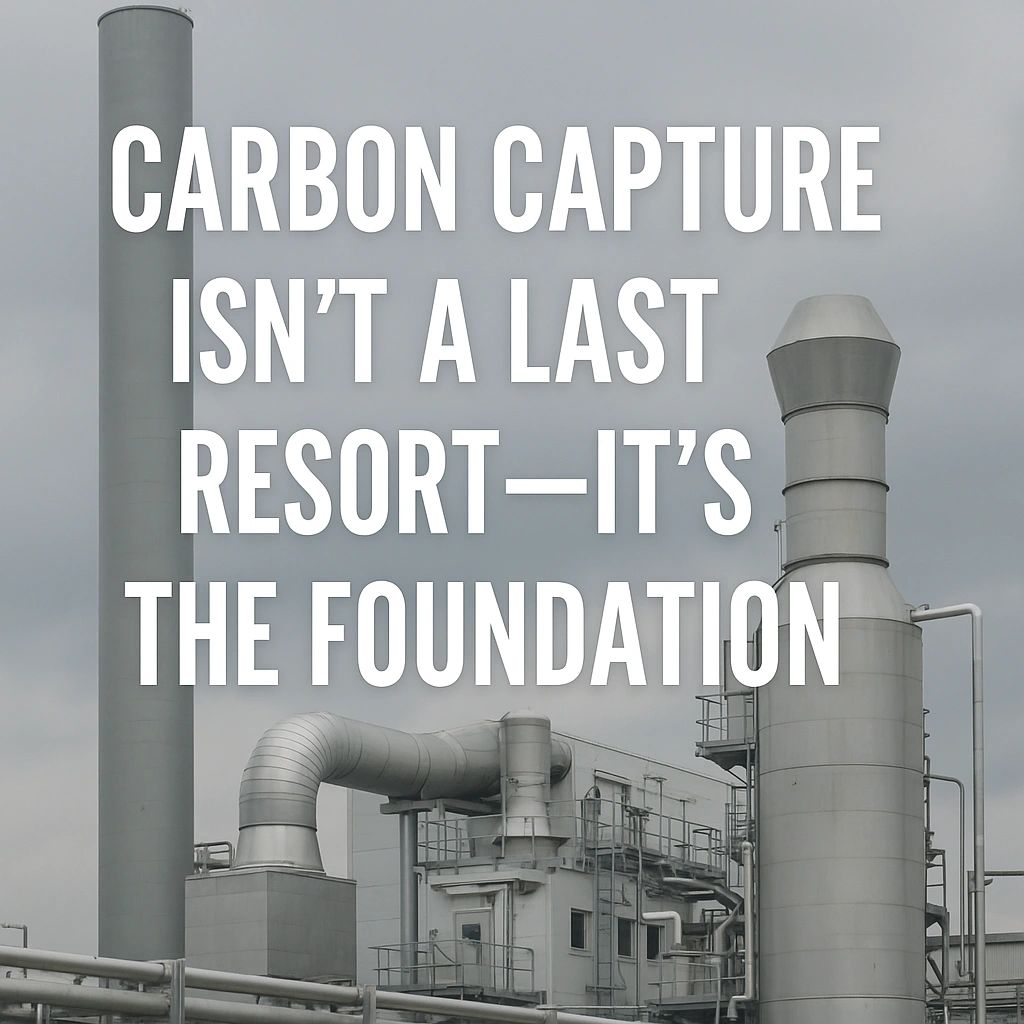
Every time carbon capture comes up in the news, it feels like the same script gets recycled. It’s too expensive, it’s too slow, and it’s really just a way for fossil fuel companies to keep drilling. Those takes are getting old. Norway’s Longship value chain actually went live in the summer of 2025. At Heidelberg Materials’ Brevik plant, CO₂ is being captured and shipped to the Northern Lights terminal at Øygarden, with the first volumes injected 2,600 meters below the seabed on August 25, 2025. Heidelberg also pre‑sold its entire 2025 allocation of evoZero, its carbon‑captured net‑zero cement. That’s not symbolism; that’s demand.
This is where the narrative usually leans on the “last resort” argument. We’re told that carbon capture is only what you do once efficiency, renewable power, and electrification have all been exhausted. But cement, and in parts of steel and chemicals, don’t play by those rules. These industries carry significant process emissions that efficiency and renewables can’t eliminate on their own. In those cases, carbon capture isn’t a fallback; it’s a necessary part of the foundation, while other pathways mature. If we’re serious about deep decarbonization, we don’t get to treat capture as optional.
That doesn’t erase the hard truths. Projects do miss deadlines, permitting is a mess, and the cost curve hasn’t come down nearly fast enough. But brushing off capture as some kind of corporate indulgence is lazy thinking. Norway covered roughly two‑thirds of Longship’s costs, and people still lined up to buy the cement. That’s not a subsidy giveaway, it’s an industrial strategy. Governments spend billions every year propping up sectors and other groups that don’t have a climate angle at all. In this case, public money is building infrastructure that gives heavy industry a fighting chance in a low‑carbon economy.
The fossil industry angle is another favourite soapbox. Critics argue that capture is just a fig leaf to justify more drilling. Sometimes that’s true, but it’s also a dodge. The fact that oil and gas firms are involved doesn’t make capture inherently dirty. In fact, their engineering capacity, capital, and underground storage expertise are precisely what’s needed. The question isn’t whether fossil fuel companies should be in the mix; it’s whether they can be held accountable to deliver real results instead of excuses.
Here’s what the Norway story really highlights. Trust in carbon capture won’t come from headlines or big announcements. It will come from projects that are operating, shipping, injecting, and selling products people actually want, backed by transparent accounting and verification. It will emerge from a political conversation that begins with the reality that capture must exist for specific industries, and then works backward to determine how to make it cheaper, faster, and more reliable. We shouldn’t be debating whether capture is a moral hazard. We should treat it as a fundamental tool in the kit and ask how to scale it responsibly.
If Norway had asked, “Can we do carbon capture well enough to make people feel good about it?” they’d still be talking. Instead, they asked, “How far can we push this?” and now cement buyers have proof in hand. That’s the mindset shift worth paying attention to.
Not capture as a last resort. Capture as the reason some industries still have a future.