The Making of a Maker
November 7, 2025
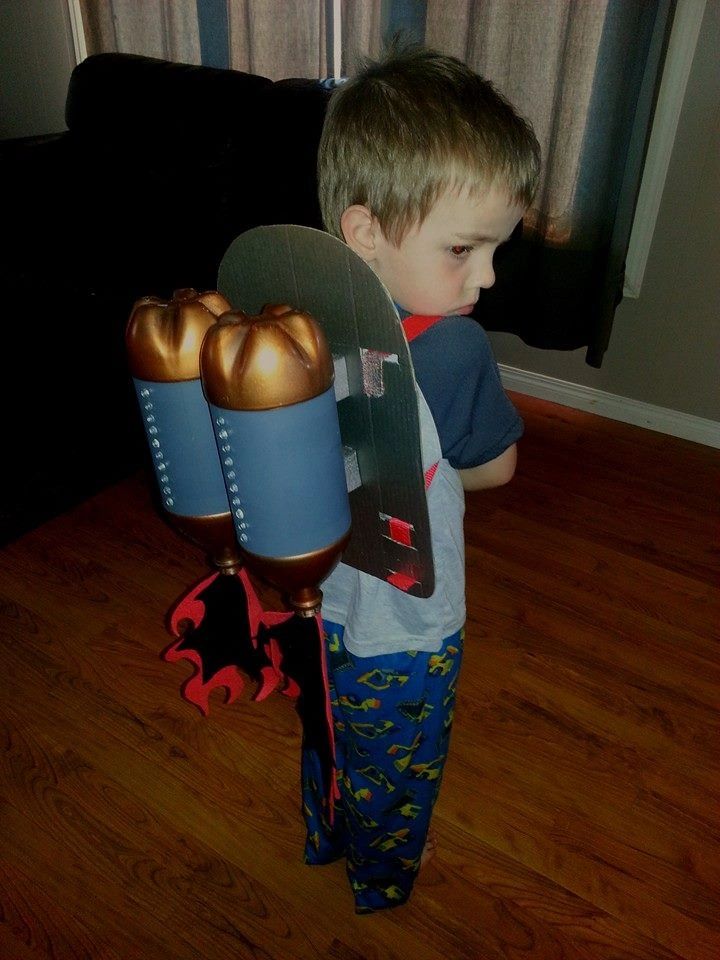
Looking back at my earliest memories, I can trace a handful of things that led me to become an inventor. Not that I ever planned it. It wasn’t a career path; it was just who I was. I liked making things, breaking things, and watching how things were made. I didn’t have the vocabulary for it then, but I was obsessed with figuring out how the world worked, and more importantly, how to make it work better.
I’ve sometimes wondered if it’s biological. My father is an innovator, my grandfather was an innovator, and from the stories I’ve heard, so was my great-grandfather. On both sides of my family, my mother’s and my father’s, there were business owners, builders, and people who never waited for permission to try something new. Maybe it’s in the DNA. Maybe it’s environmental. Either way, it stuck.
As a kid, I had a couple of influences that I can still point to. I had a Meccano set and a Tinker Toy set, both of which were probably the best gifts anyone could’ve given me. I spent hours assembling, disassembling, and reassembling little machines that didn’t do anything practical but taught me how things fit together. And of course, I grew up watching Wile E. Coyote. Say what you want, but there’s something deeply relatable about a character who keeps buying innovative products from ACME, fails spectacularly every time, and still never gives up. I probably learned more about persistence from that cartoon than any school lesson.
But the biggest influence was my dad. He was always building something in the garage. I’d sit there and just watch, the sound of saw blades, the smell of solder, the quiet problem-solving that happened between muttered swears and moments of pride. I started dragging home broken electronics from garage sales and dumpsters just so I could take them apart. I loved the way they smelled, that bitter, dusty, almost metallic scent that old circuit boards give off. Even now, I can remember that smell vividly. It was the scent of curiosity.
The Hard Years
Here’s where my path veers from the typical “inventor” story. I wasn’t overly educated. I didn’t finish high school. I left home at sixteen, stubborn, angry, convinced that I could handle life on my own. I couldn’t. I spent a couple of years living on the streets in Calgary, sleeping wherever I could, taking odd jobs when I was lucky, and learning more about human resilience than any classroom could’ve taught me.
Adversity became something I understood intimately. And strangely, it became fuel. Years later, when I’d talk to other entrepreneurs or innovators, I’d notice the same pattern, almost every one of them had been through something hard, something dark. The kind of experience that reshapes you. They all learned how to take the worst moments of their lives and turn them into momentum. You either break or you adapt. I chose to adapt.
Those years toughened me up. They gave me a high tolerance for discomfort, uncertainty, and risk, three traits that pretty much define innovation. When I look back on that period of my life, I don’t see failure. I see the foundation of everything that came next.
Early Creations
The first thing I ever made, at least that I remember clearly, was a hovercraft. I was about twelve or thirteen. I drew the plans on graph paper, like a proper engineer, and then built a small model out of balsa wood. It never worked the way I imagined; I didn’t have the materials or tools to get it right. But in my head, it was perfect. I could see it gliding across the floor, a little miracle of air pressure and balance.
Around that same time, I came up with a board game concept. This was the early 1980s, long before Settlers of Catan hit the shelves. My game was about building early civilizations, less fantasy, more strategy. I loved Dungeons & Dragons, but I wanted something that didn’t rely on dragons or spells. Something grounded in human progress. I hand-drew the board, made my own dice, and convinced a couple of friends to play. It was clunky, but it worked.
That was my first taste of what it felt like to create something original, to imagine a world, then make it tangible.
The Road Back
After I managed to get off the streets, I spent a few years bouncing between jobs, figuring out how to stay on my feet. Then I started inventing again.
One of my first real products was something called Phat Heads, a beanie-style headwear line that I somehow managed to get into Mark’s Work Wearhouse, a big Canadian retailer. Looking back, the name was cringey and the product wasn’t great. But it was mine. I made it, branded it, packaged it, and sold it. They placed one order, sold a few, and that was it. Still, it was validation. For the first time, something I built was on a store shelf.
After that, I moved to Fort McMurray, where I met my wife. Eventually, we moved down to Edmonton. That’s where I built my next invention, a wireless pipe inspection camera. Back then, professional inspection cameras cost $15,000 to $20,000. I built mine for around $5,000 and started selling through Wolseley, one of the biggest plumbing supply companies in the country. It was a solid idea, but the cost to scale was beyond what I could afford. Without funding, the project stalled. I sold a few units, then had to let it go.
Not long after, I tackled another common problem, connecting plastic pipe to copper. Every transition coupling on the market leaked or eventually blew apart. I designed a new coupling with a threaded connection and an O-ring seal, simple, effective, and built to last. I pitched it to IPEX, a major piping manufacturer. They passed. A year later, someone else released nearly the same design. That could’ve made me bitter, but honestly, it didn’t. It made me feel validated. I wasn’t wrong; I just hadn’t executed fast enough.
That was a hard lesson. I started realizing that I was good at ideas but terrible at bringing them to life. The pattern was clear: I could see the potential, but I didn’t know how to scale it, protect it, or rally others around it. My biggest flaw was thinking I had to do everything alone.
The Turning Point
The turning point came after an argument with my wife. She told me, bluntly, that I was my own biggest obstacle. She wasn’t wrong. I had spent years insisting on doing everything myself: designing, building, pitching, selling. I thought asking for help was a weakness. It wasn’t. It was blindness.
That conversation changed everything. I started forcing myself to collaborate. To listen. To let people in. And in doing so, I learned one of the hardest truths of innovation: no invention happens in isolation. Every good idea needs a team, a community, a mix of skills and personalities that sharpen it into something real.
Since then, I’ve surrounded myself with incredible people, engineers, designers, visionaries, and skeptics. I’ve learned to share ownership of ideas and to value execution as much as imagination. It’s a different kind of creativity, building something that lasts because it’s not dependent on one person’s stubbornness.
Looking back now, I can see the pattern clearly. Every failure, every rejection, every near miss was part of a long apprenticeship in humility. It took me a long time to realize that being an inventor isn’t about brilliance or luck; it’s about perseverance, collaboration, and the courage to keep creating even after the last thing fell apart.
The Thread That Connects It All
From the dusty smell of old circuit boards on my childhood desk to the prototypes scattered across my workshop today, the thread hasn’t changed. I still love making things. I still love solving problems. The difference is, I finally understand that invention isn’t just about building devices, it’s about building yourself.
And maybe that’s the real invention here: turning a kid who lived on the streets into someone who helps build a cleaner, better world. It wasn’t a straight path, but it was the right one.