The UK’s Heating Transition Is Colliding With Reality
January 13, 2026
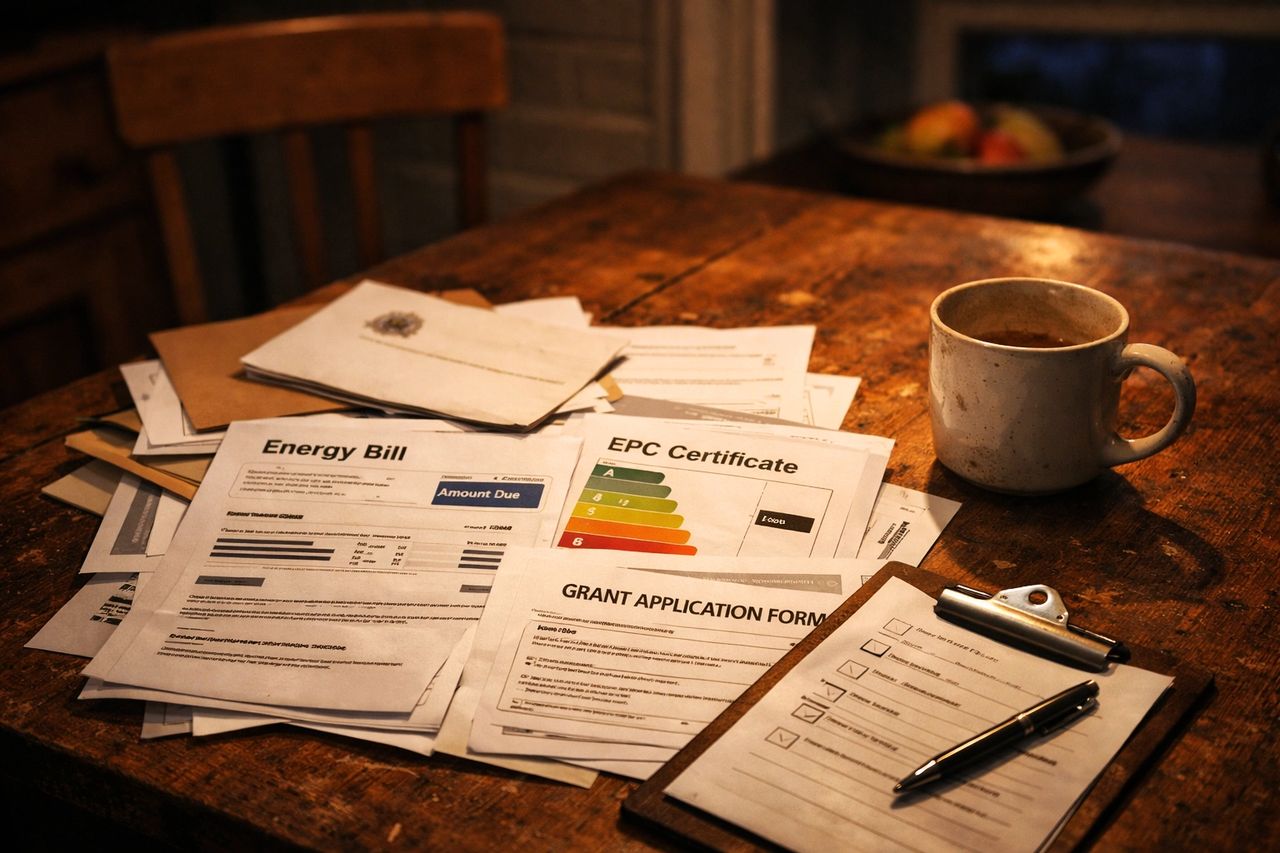
From the outside, the UK’s heating transition looks less like a failure of ambition and more like a collision with physical, economic, and institutional realities. Targets remain very bold, incentives still exist on paper, and the technology (ours) is no longer speculative. Yet progress on the ground keeps slipping against the timelines implied by policy. Watching this from Canada, where we have our own stock of drafty buildings and long winters, the pattern feels familiar. Decarbonizing heat does not behave like decarbonizing electricity or transport. It is slower, and it depends on people letting technicians into their mechanical rooms.
The stakes are certainly not trivial. Heating homes and commercial buildings with gas and oil accounts for roughly 14% of UK territorial carbon emissions. That alone explains why heat keeps getting pulled forward in net-zero strategy documents. What is less often acknowledged is how deeply natural gas is embedded in millions of individual properties that already work well enough from the occupant’s point of view. Unlike power generation, which can be transformed upstream, heating requires intervention inside living rooms, plant rooms, and shops that are not asking to be disrupted.
UK policy has struggled to square that reality with its stated goals. The Heat and Buildings Strategy set out a phase-out of new gas boilers by 2035, alongside earlier ambitions for six hundred thousand heat pump installations per year by 2028. As of 2024, roughly ninety-eight thousand heat pumps were installed across the UK. That is not nothing, but it is still an order of magnitude off what the math demands. Even generous projections suggest that by 2030 heat pumps may reach only around ten percent of households, leaving most buildings on fossil heat well into the 2050s.
This gap is often described as a communications problem or an installer bottleneck. In practice, it is mostly an economic and risk calculation made by people who own buildings. Typical air source heat pump installs land somewhere between seven and eighteen thousand pounds, with ground source systems pushing higher. Grants of up to seven thousand five hundred pounds help, but rarely close the gap. For many households and small businesses, the remaining cost is real money, especially when electricity prices, system performance, and long-term policy signals still feel like moving targets.
From an engineering standpoint, hesitation is rational. Heating systems are mission critical infrastructure. When they fail, buildings become uncomfortable fast, and sometimes uninhabitable. Asking owners to replace a known gas system with a higher cost alternative while grid pricing, incentive rules, and regulatory timelines continue to shift creates a trust problem that subsidies alone cannot solve. Adoption slows not because heat pumps do not work, but because the surrounding system does not yet feel settled.
I keep coming back to how small the points of friction are, and how sticky they become. A neighbour complaining about radiator sizing. A landlord annoyed about the downtime between tenants. An installer booked out six months because the paperwork takes longer than the pipework. This is what an impractical energy transition looks like when it is designed by policymakers who are not especially connected to the industry they are trying to fix.
Recent policy developments reflect that tension. The government has reaffirmed its commitment to clean energy investment, but clarity on how residential and commercial heat decarbonization is meant to be financed at scale remains thin. Proposals under the Warm Homes Plan, including shifting some transition costs onto gas users through an annual levy reportedly around thirty pounds per household, triggered predictable backlash. Nationally that number looks modest. On a monthly bill, it does not.
This is not a retreat from climate goals so much as political gravity asserting itself. Heat sits at the intersection of affordability, reliability, and habit. Unlike electricity generation, where change can be centralized and largely invisible, heating retrofits are intrusive and uneven. Old terraces, rental stock, light industrial units, and owner-occupied homes all carry different constraints, yet policy still tends to treat them as variations on the same problem.
The implications run beyond near-term adoption rates. The Seventh Carbon Budget assumes emissions falling to roughly eighty-seven percent below 1990 levels by 2040, which quietly relies on widespread building decarbonization within the next fifteen years. Delays now do not just push the curve rightward. They steepen it. Commercial property markets are already reacting through energy ratings and minimum efficiency standards, with gas-heated buildings starting to face valuation and compliance pressure even as credible retrofit pathways remain fuzzy.
From the outside, the lesson is not that the UK lacks commitment or technical capability. It is that decarbonizing heat demands a different posture than decarbonizing power. It needs policy that survives election cycles, workforce planning that looks boring but sticks, and protections for low-income households that go beyond clever cost shifting. Mostly it needs to admit that this transition will be judged by systems that stay running through February, not by targets announced at podiums.
The heating transition is not stalled because the technology is immature. It is colliding with buildings, budgets, and people. Until policy lines up more closely with those constraints, progress will keep looking slow.