You're being lied to.
August 11, 2025
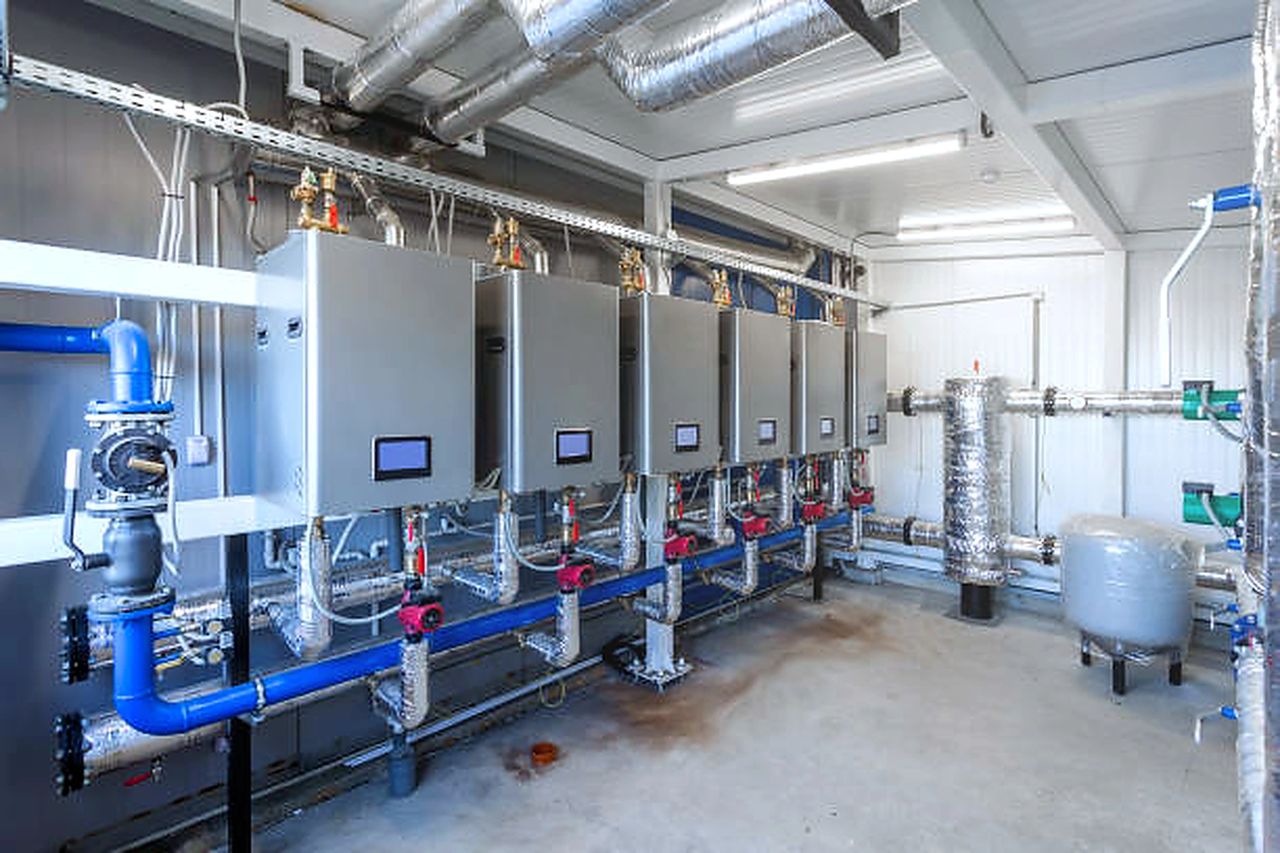
Not cartoon-villain lies. Softer ones. The kind that starts with, “Policy says you need a high-efficiency boiler,” or, “Swap this in and you’ll save 30%.” Sign here, magic later.
I’ve been in mechanical rooms for two decades. The lie isn’t that condensing boilers can’t be efficient. They can. The lie is pretending they’ll be efficient everywhere, no matter how the building moves heat.
Most buildings I see use one of two approaches.
Perimeter heating, baseboards and radiators tracing the room edges. These systems were sized for high water temperatures: hot out, still hot back.
In-slab / in-floor, the floor becomes the radiator, happiest at low water temperatures.
Radiant floors aren’t new. Korea’s ondol shows up archaeologically about 7,000 years ago. The Romans ran hypocausts roughly two millennia back (Vitruvius even credits Sergius Orata). Radiant made a modern comeback in the 1930s - 40s, and by the 1980s, it was a residential staple. Meanwhile, commercial work mostly stuck with perimeter loops because they’re cheaper to install and easier to value-engineer.
Here’s where the efficiency story bends. Condensing boilers only hit their headline numbers when the return water is cool enough (≈130°F / 54°C or lower) to condense flue vapor and grab that latent heat. Perimeter systems were designed to run hot (classic: ~180°F supply / ~160°F return), so the return is too warm to condense most of the season. Your 95 - 98% “lab” boiler performs like a slightly better mid-eff unit in the wild.
And about those labels:
- “Mid-efficiency” doesn’t mean 50%. Industry “mid” is typically ~80 - 85%. If you don’t live in this world, “mid” sounds like “meh,” and that’s misleading.
- “High-efficiency 98%” is conditional. In real buildings, especially high-temp perimeter loops, you’ll often see high 80s to low 90s seasonal efficiencies. That’s still good. It’s just not brochure-good.
The economics? That’s the part that stings. If a replacement project runs ~$250k and the real, measured improvement is ~5 to 10%, the math can feel underwhelming. It might still be the right call for reliability, compliance, or safety, but let’s not pretend 5 to 10% is 30%.
Hydronics are fantastic. Water carries heat beautifully and feels human. But boilers don’t make efficiency in a vacuum; systems do. If you’re perimeter-based and no one plans to lower water temps (outdoor reset, emitter tweaks, smarter pumping, maybe carving out a low-temp loop for DHW or slabs), you paid for features you won’t use.
That’s the lie: selling a label as if it overrules physics.
The truth is better. Design for the temperatures your boiler needs, or choose equipment that matches the temperatures your building actually runs. Either way, you get comfort first, and real efficiency that shows up on the bill.